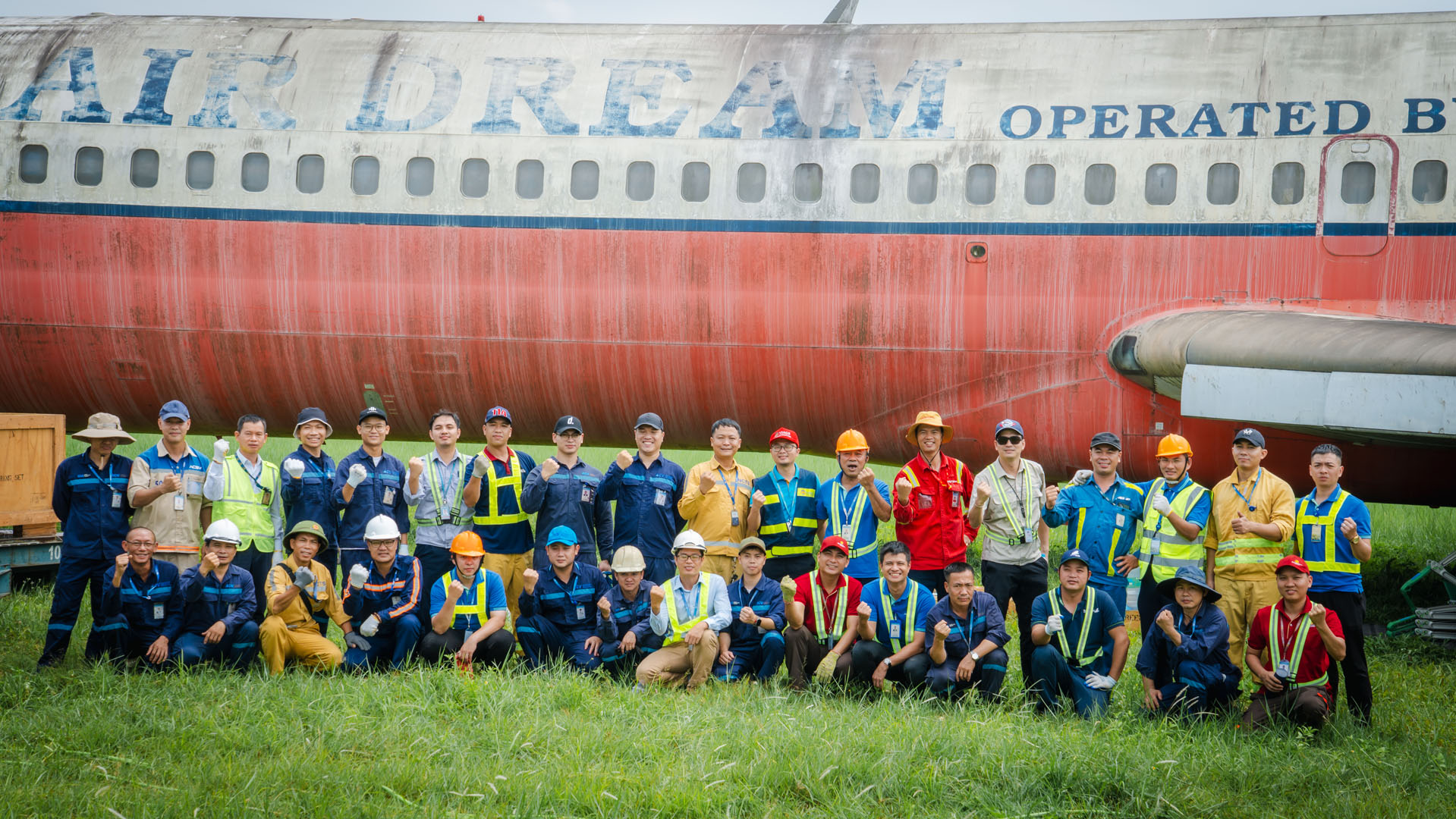
From June 1 to 11, 2026, Noi Bai International Airport (NIA) conducted its Aircraft Rescue Training Course, with the participation of 33 officers and staff members. This annual training is a key initiative aimed at strengthening inter-unit coordination and enhancing emergency response capabilities within the airside area.
Pioneering Mastery of Advanced Rescue Equipment
As the gateway airport of the nation's capital, Noi Bai International Airport takes pride in being the first airport under the Airports Corporation of Vietnam (ACV) to be equipped with a comprehensive, state-of-the-art aircraft rescue equipment suite meeting international standards.
Following the successful completion of technology transfer from foreign experts, the Airport has proactively established and maintained a programme of regular annual training and drills. This year's course comprised 88 hours of rigorous instruction and hands-on practice, bringing together 33 core officers and staff members from five NIA departments: the Airside Operations Center, the Aviation Technical Services Center, the Terminal Operations Center, the Airport Operations Control Center, and the Safety & Quality Control Division. The course also welcomed representatives from airlines and ground handling service providers currently operating at the Airport.
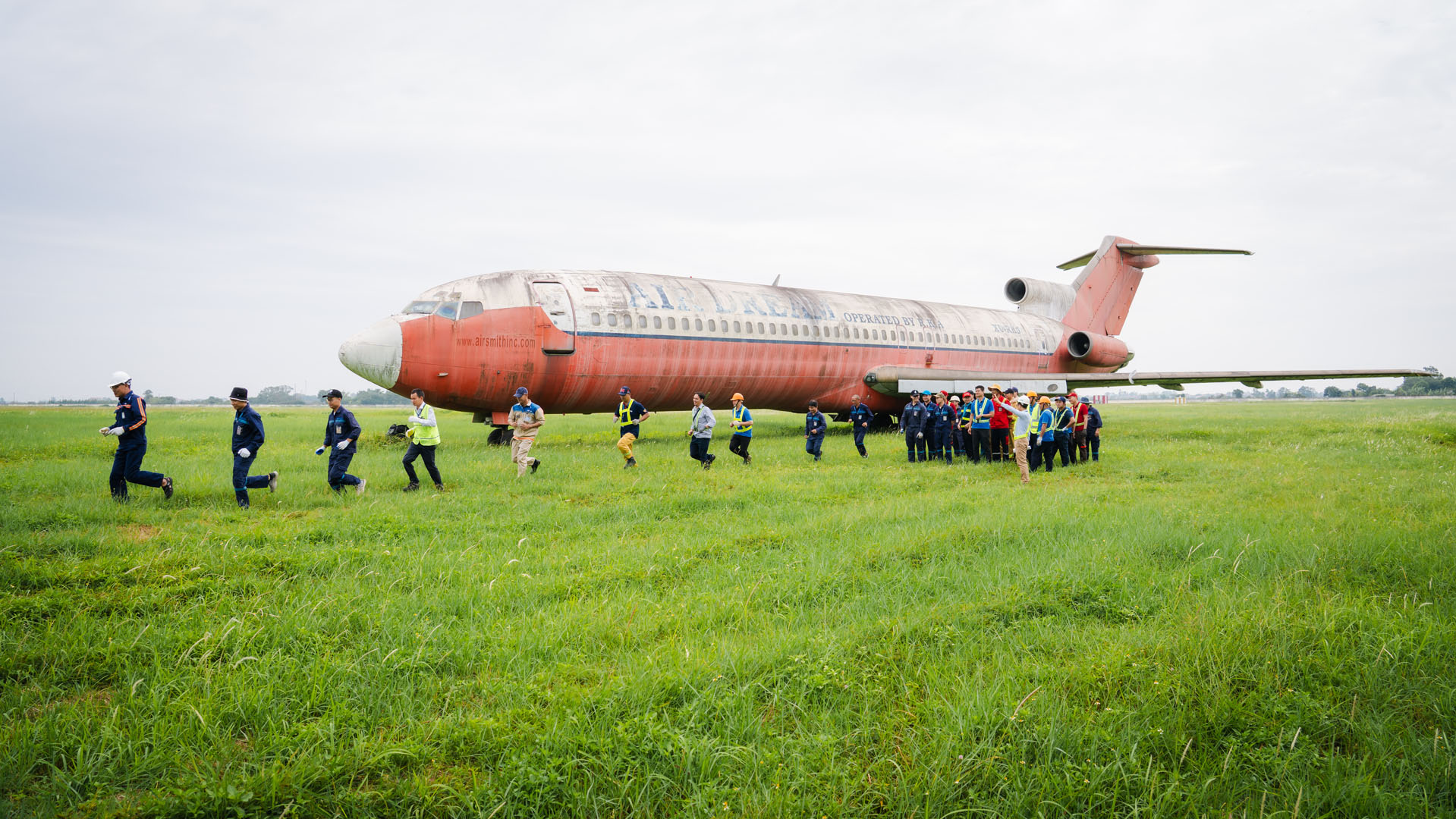
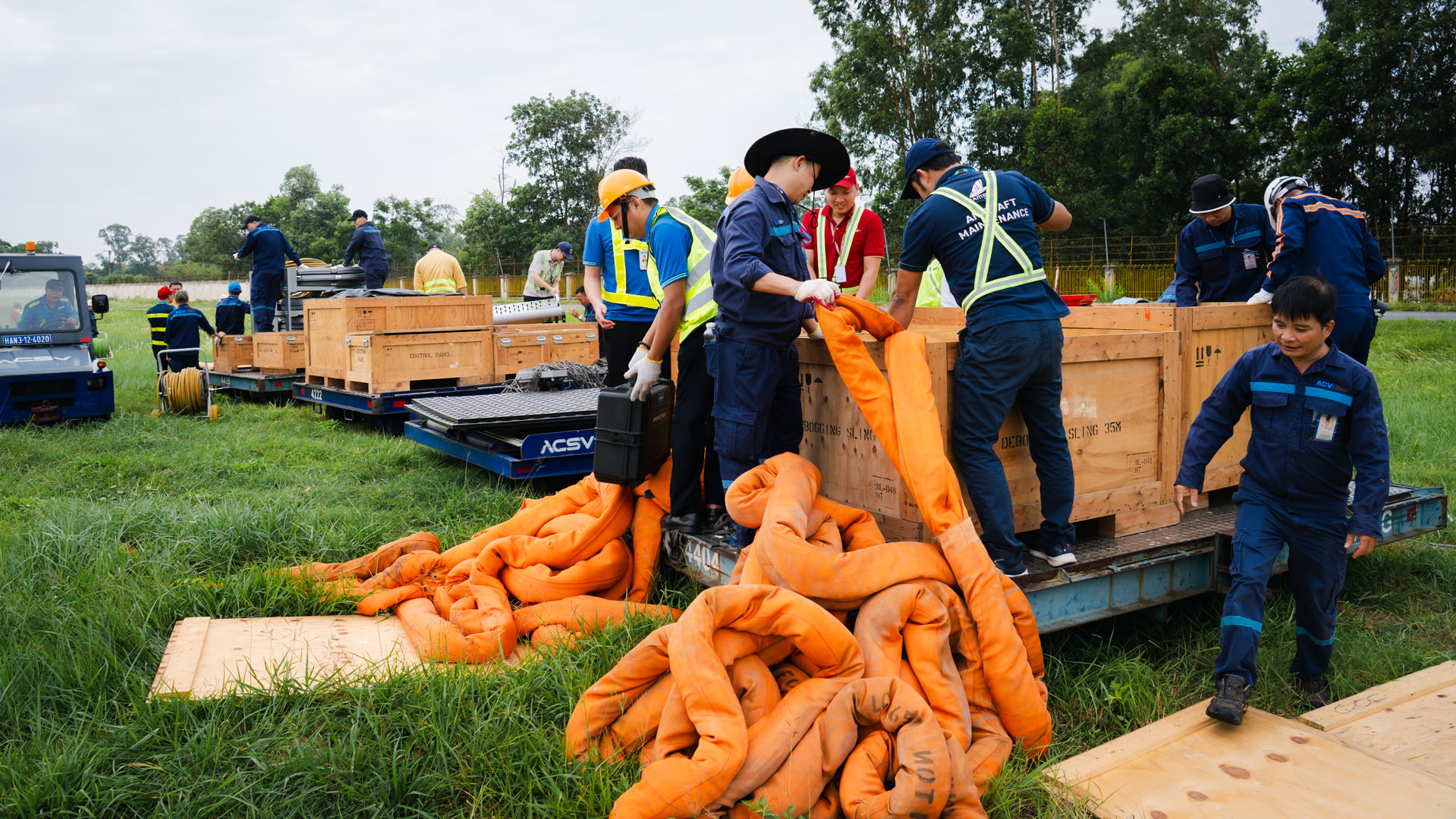
"Officers and staff participating in the Aircraft Rescue Training Course at Noi Bai International Airport"
Hands-On Training Aligned with Real Operational Scenarios
The highlight of the course was the practical exercise conducted at a site located to the east of taxiway S10. Noi Bai International Airport utilised a Boeing 727-200 as a full-scale training platform for the deployment of rescue procedures. To ensure zero disruption to normal airport operations, the entire training area was secured with safety barriers established 10 metres from each wingtip.
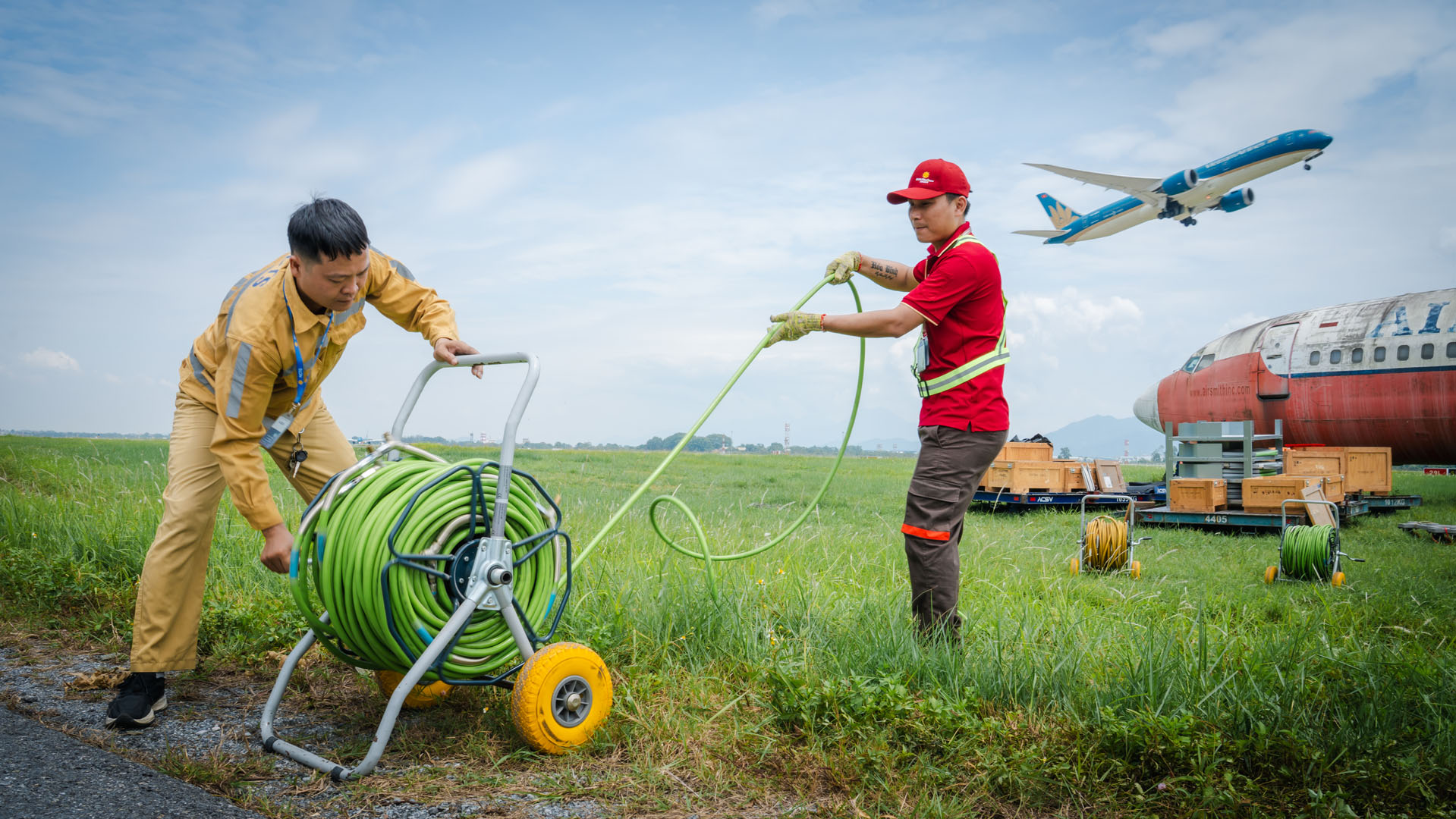
On site, participating teams carried out coordinated practical drills simulating a landing gear collapse scenario. Each complex technical procedure was executed with precision down to the centimetre, including:
- Lifting Equipment Operations: Deployment of the high-pressure airbag system (R2S) at wing jack points, along with low-pressure belly bags (LP Bags), to lift the aircraft fuselage.
- Recovery & Movement Equipment Operations: Establishment of a tethering system to stabilise and secure the fuselage, application of nose gear debogging lines, and installation of Qmat ground reinforcement panels on soft ground surfaces.
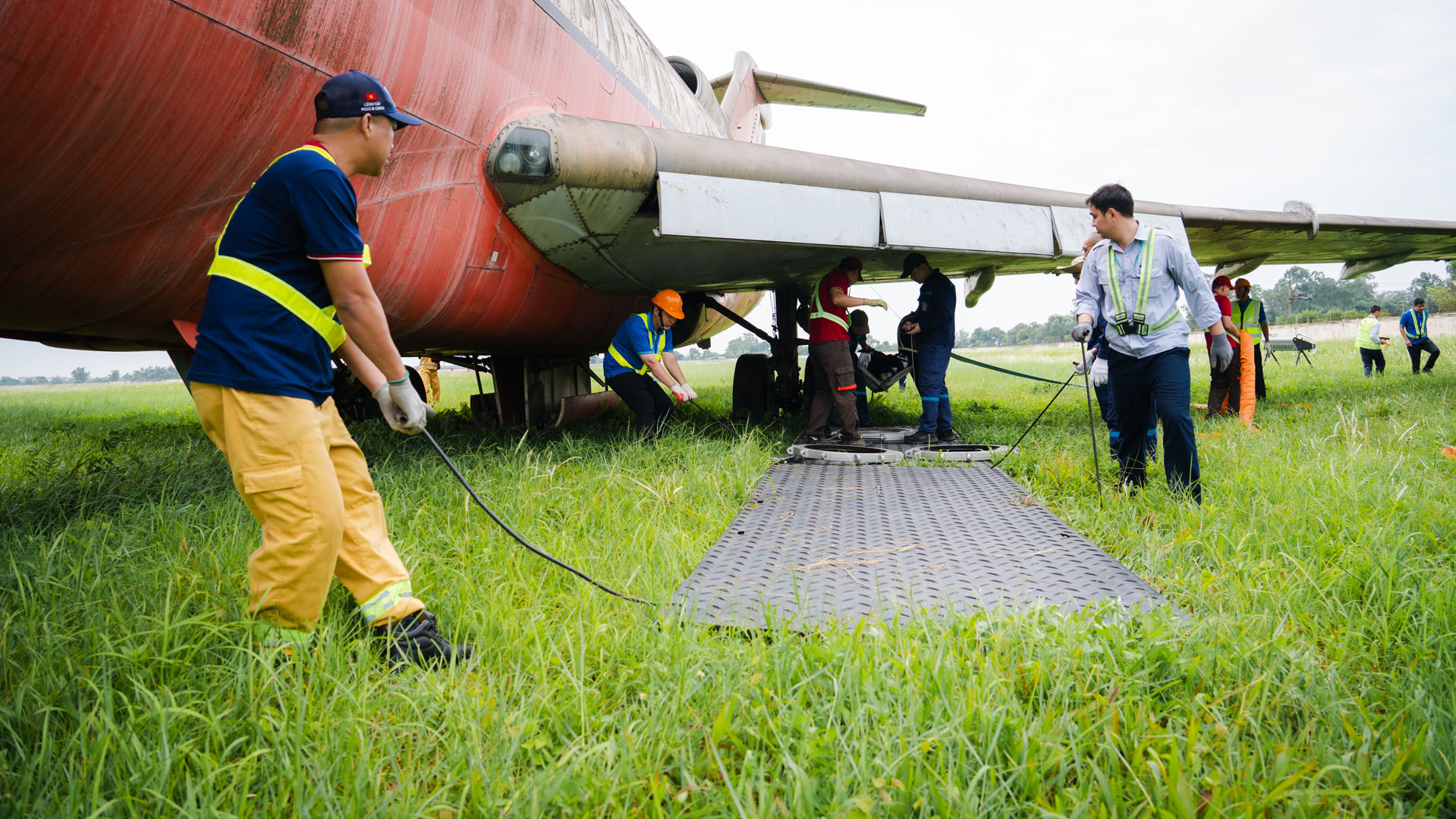
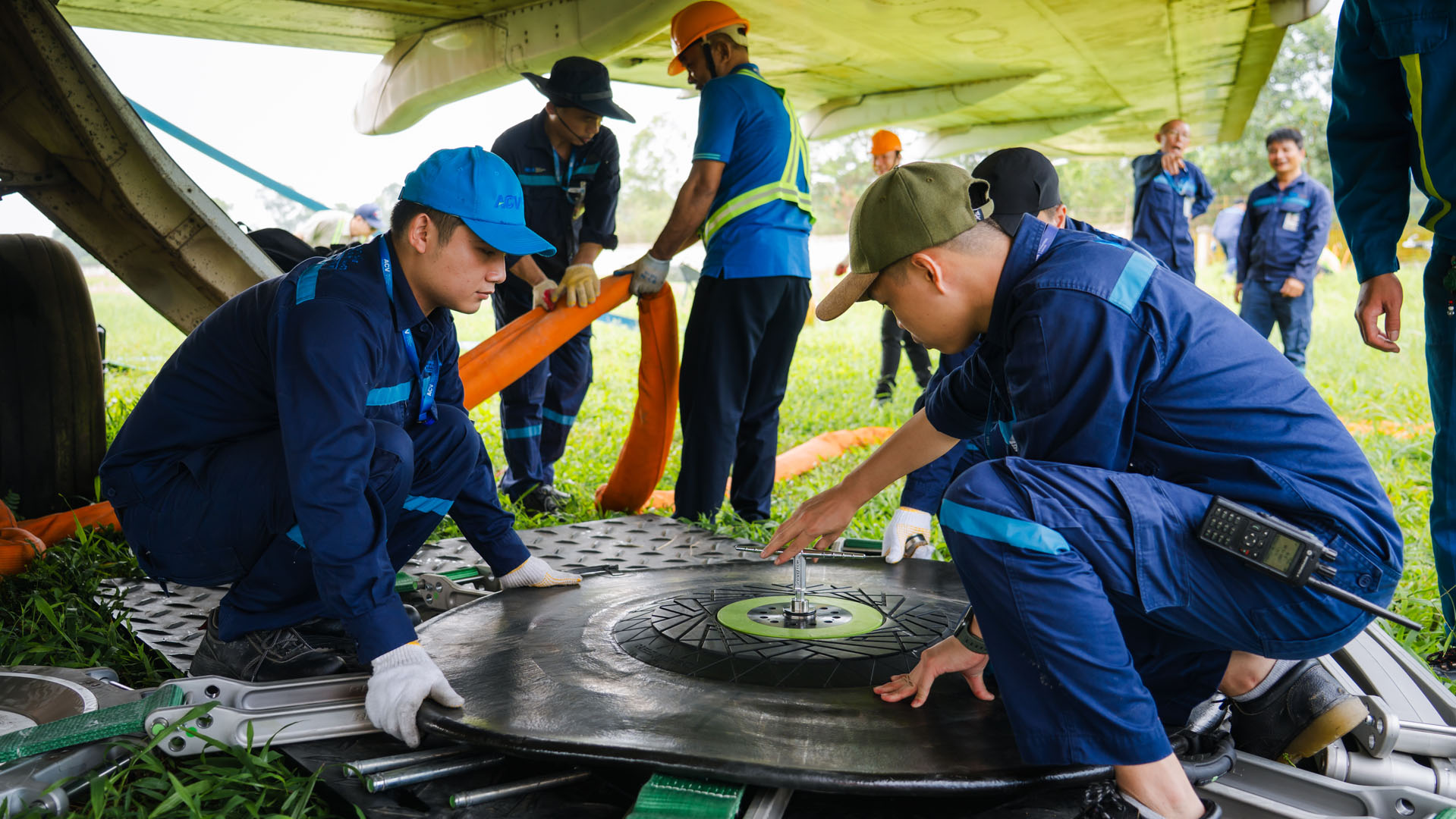
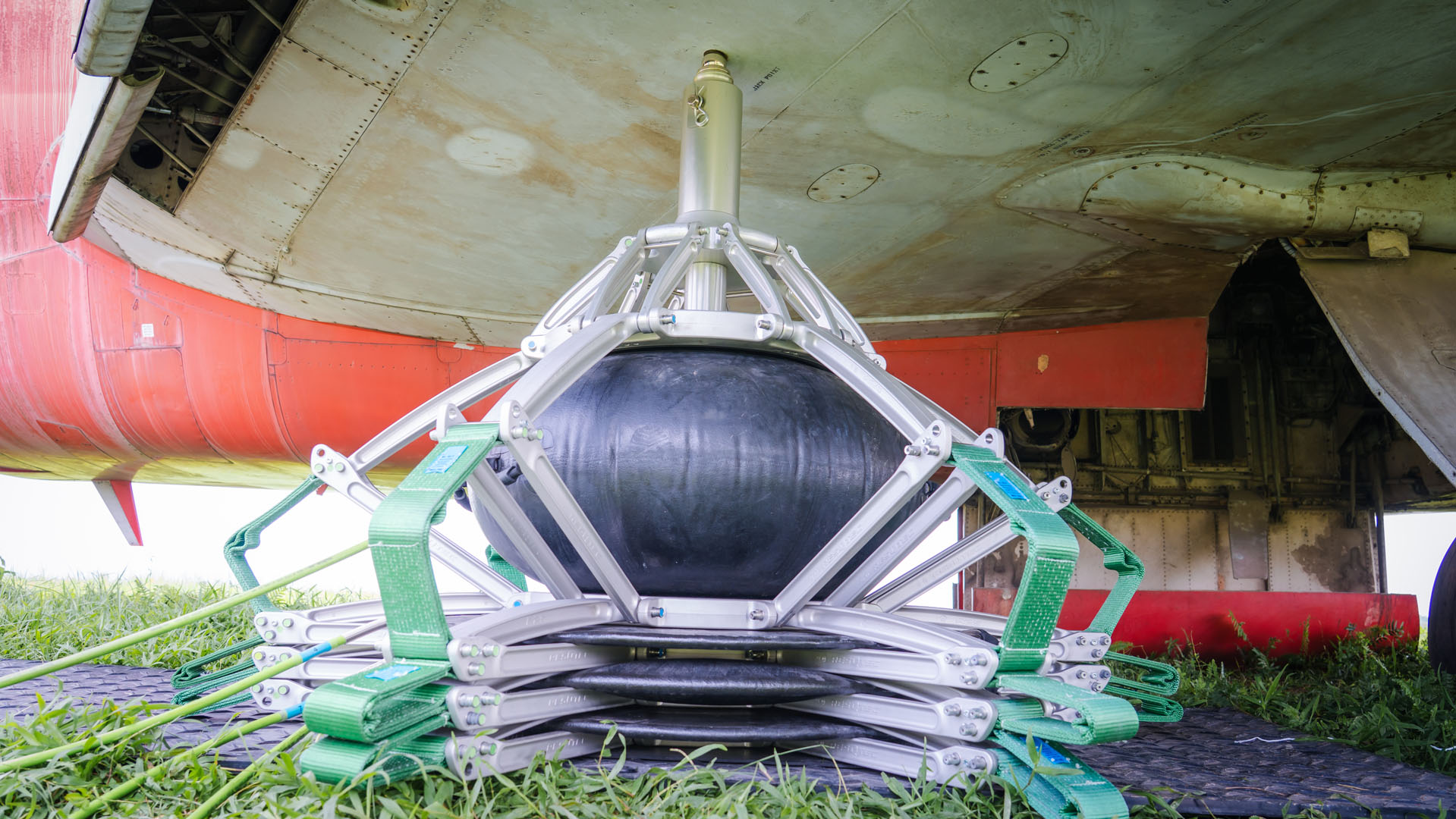
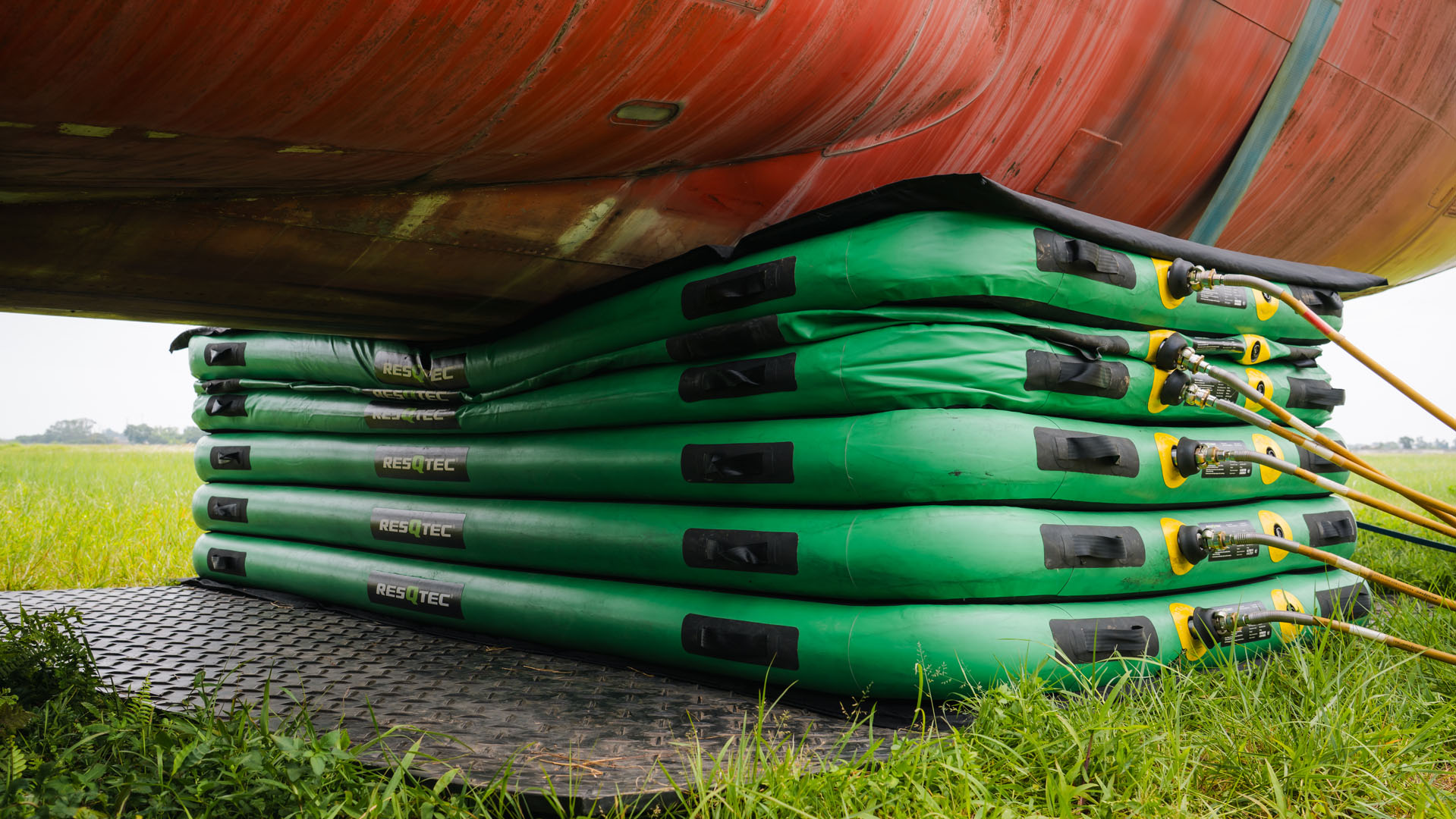
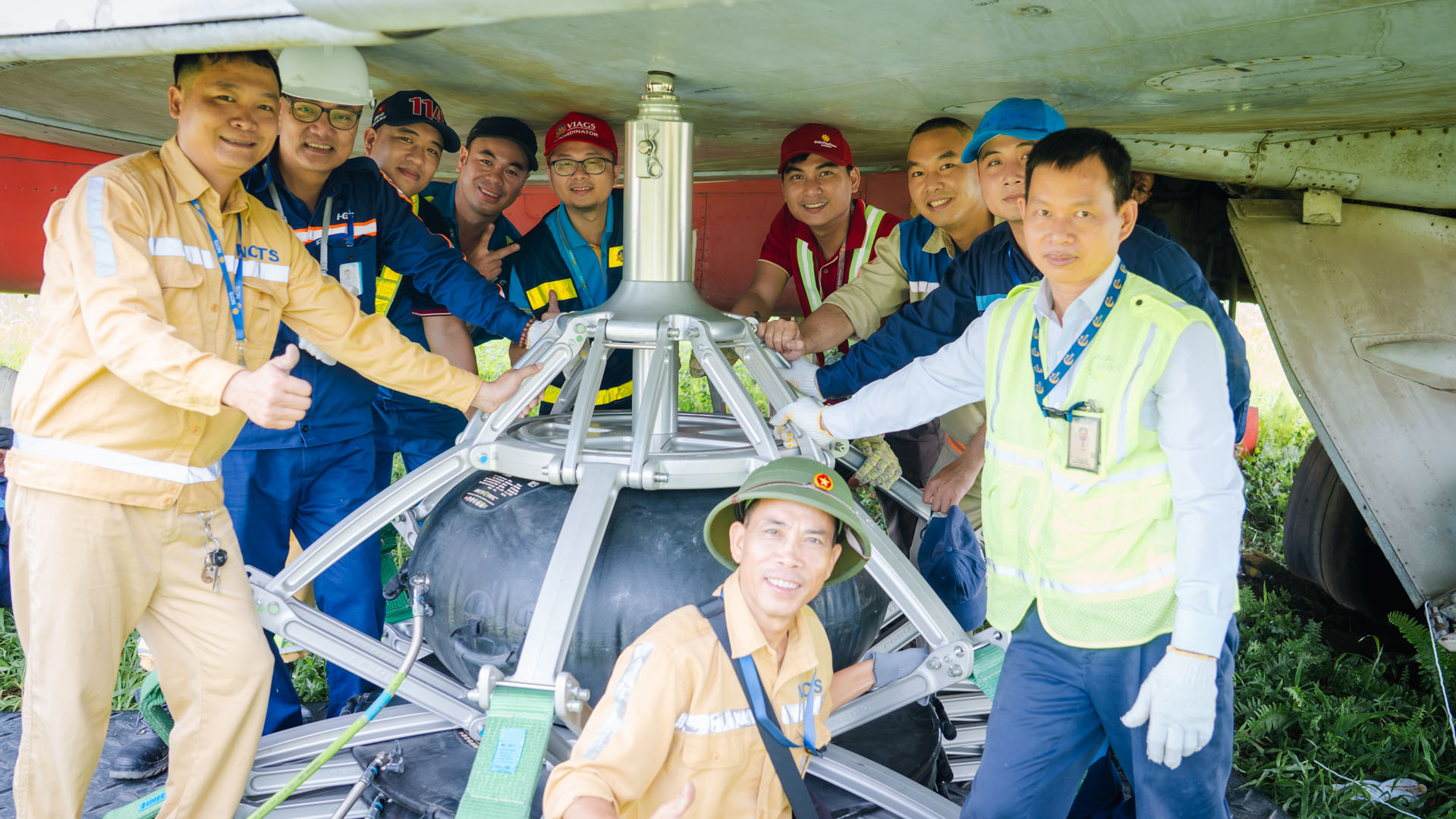
"Technical teams deploying the aircraft lifting airbag system with centimetre-level precision"
Every procedure — from knots to mechanical connections — was thoroughly inspected under the close supervision of training officers and the instruction panel. Throughout the practical exercises, airside occupational safety standards were upheld to the highest level.
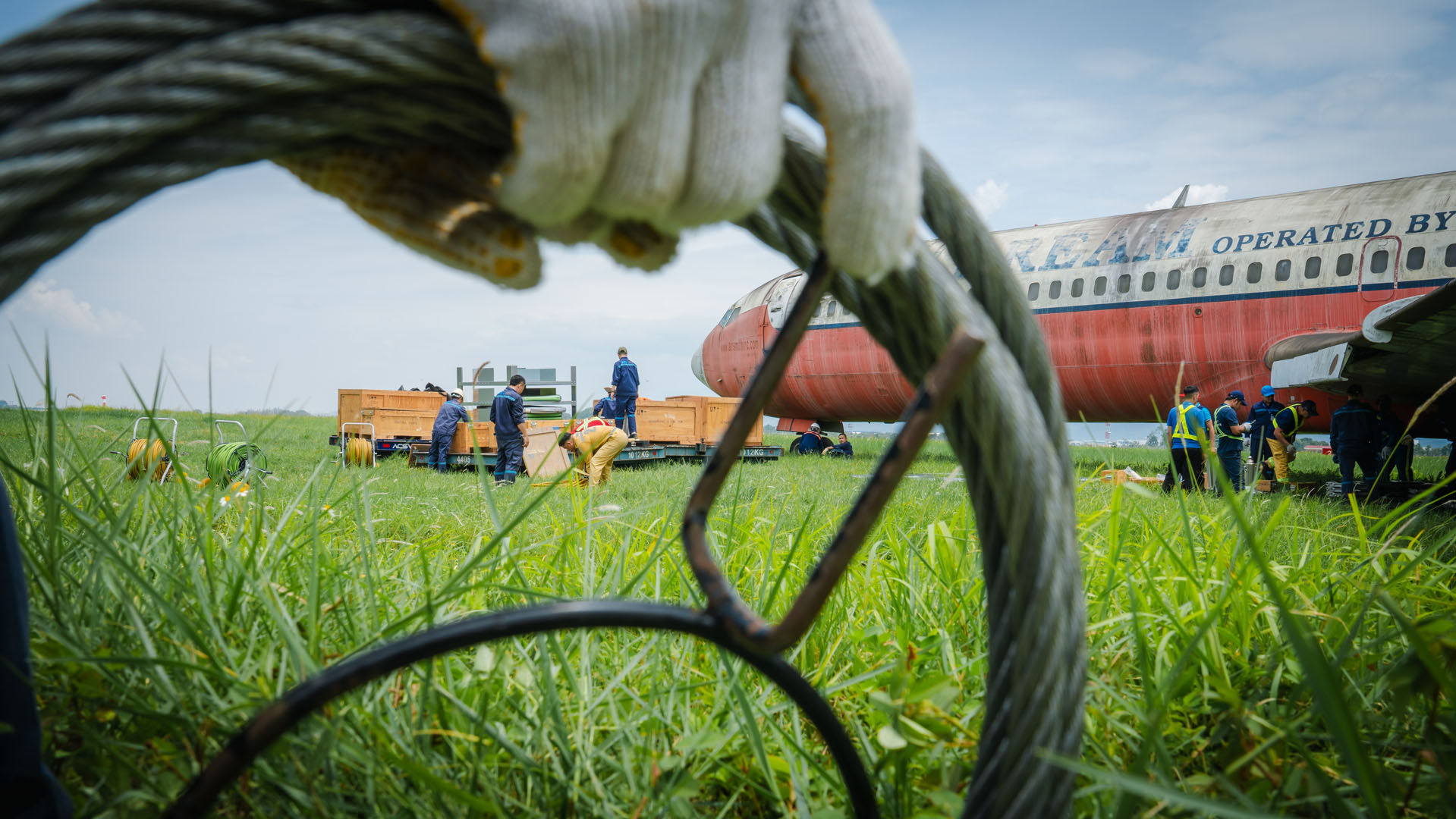
The Highest Commitment to Aviation Safety
Every drop of sweat on the runway — from engineers and emergency response personnel alike — stands not only as a testament to their unwavering sense of duty, but also as the strongest affirmation of Noi Bai International Airport's commitment: absolute safety in every situation.
Mastery of advanced rescue equipment and seamless coordination among all units serve as the cornerstone of the Airport's operational readiness — enabling swift, effective response to any abnormal situation, and safeguarding the safe passage of every flight departing from and arriving at the Airport.